AI is changing how we do work. Tools like Codex, Cursor, Lovable and Legora help people produce software, designs and professional work with far less effort. Much of the progress so far has focused on this side of the economy: producing value.
Doing the work is only half the story.
Distribution is the other half.
Distribution is how we find the people who need what we offer, and the goods and services we need ourselves. Building software faster does not automatically help us find customers. Writing more applications does not make it easier to find the right job. These connections need their own breakthrough.
When AI makes markets worse
A common approach is to treat existing distribution channels as fixed, then use AI to do more of what people already do. Consider two ambitions:
Build SaaS platforms ten times faster.
Find leads and sell B2B SaaS subscriptions ten times faster.
Building software
Automating code can reduce the effort needed to create something useful. Better tools make the work itself more productive.
Selling software
Automating outreach sends more LinkedIn messages and emails, but every message creates work for someone else. Recipients ignore, skim or automate the screening of an ever-growing pile.
This failure can appear in any bilateral market: jobs, business services, sales, dating, or any exchange where two sides need to find each other. AI has exacerbated it. Sending an application costs less, so people send more. Less care goes into each one, and the messages increasingly sound the same. The circumstances that make a person or an offer worth considering get lost.
On the receiving side, the flood makes careful attention harder. Screening becomes faster and shallower, often delegated to another AI. Both sides optimise for getting through the volume. Neither has much reason to understand the other deeply. More activity produces less useful information, and good connections disappear into the noise.
For a student trying to start a career, this is exhausting. You can spend weeks tailoring applications without knowing whether anyone understood what you could offer. A referral often achieves what hundreds of applications cannot: it carries context and gives someone a reason to pay attention. Finding work should not be an endurance contest in sending messages into silence.
We believe that pouring more AI into this traditional human infrastructure makes markets less efficient and increasingly unbearable. Faster applications and faster rejection are not the breakthrough distribution needs.
Build the car
More than a century ago, people crossed cities in horse-drawn carriages. If the goal was faster transport, whipping the horse harder might briefly help. Push that approach far enough and the horse breaks down. The real leap was to rethink transport and build the car.
Outreach bots and automated application reviews are distribution’s version of whipping the horse harder. They accelerate the same strained system. At Istos, we want to build the car.
That means thinking from first principles. Applications, inboxes and endless searching are not requirements of a market. They are ways people have worked around limited information and attention. AI gives us the opportunity to build a different structure.
An institution people trust
Just as you trust Codex with your work, we want you to trust Istos with distribution. The ambition is simple: when you need a supplier, a customer, a job or a service, you can turn to Istos confident that the network will understand what matters and connect you with the right people.
We are building AI-native marketplaces around a network of living profiles: what each person or business needs, what they offer, their priorities, constraints and circumstances. The network retains the context that a standard application or a search filter loses.
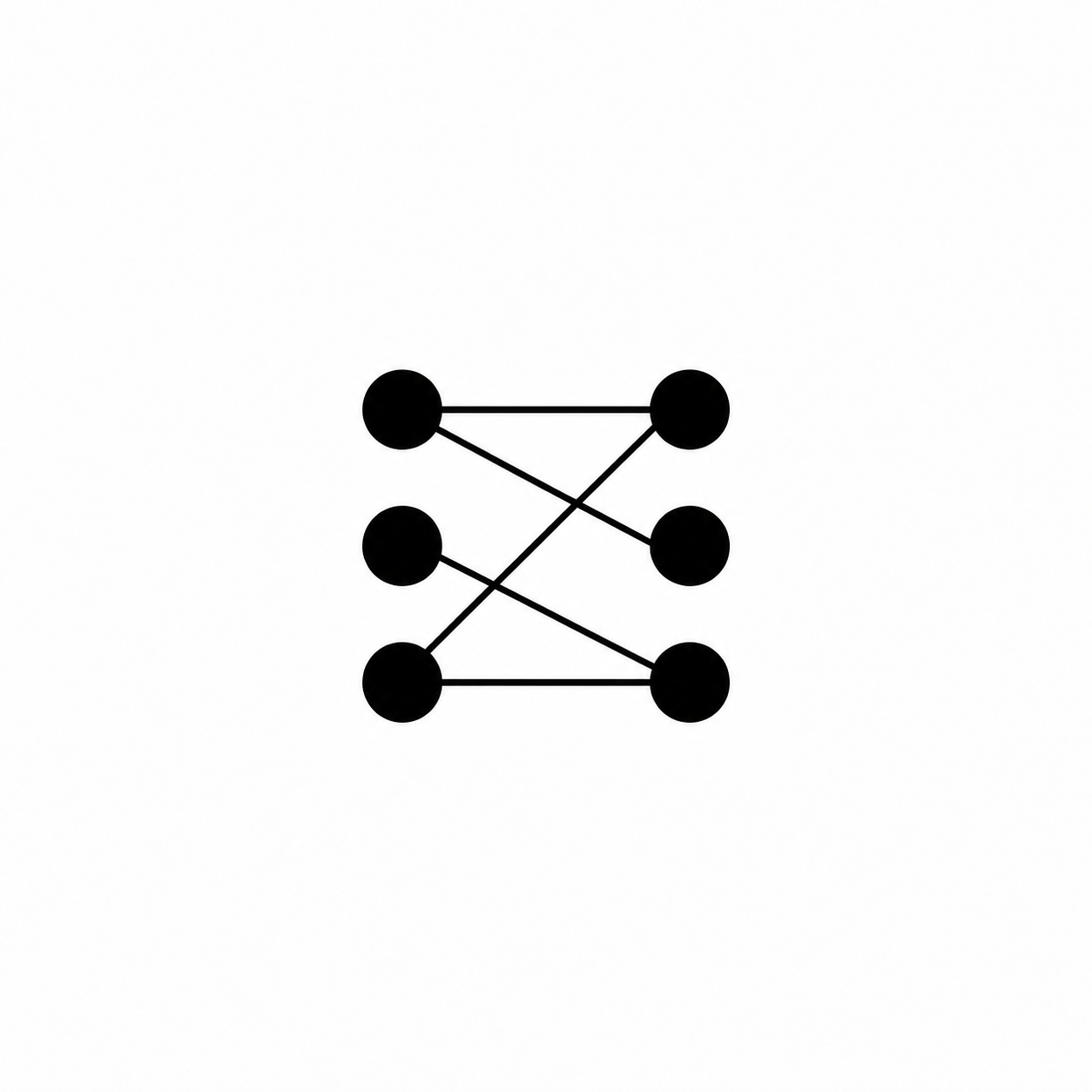
By understanding both sides, our matching algorithms can consider the market as a whole and seek the best configuration of connections. The aim is a few targeted introductions that work for both parties, rather than another pile of options to sort through.
That trust has to be earned. It comes from useful outcomes, a clear explanation of why a connection makes sense, and learning when it does not. Feedback improves the profiles and future introductions. As more participants join, the network can understand more of the market.
Our ambition is for people to trust that understanding enough to stop searching elsewhere. We see this applying to business services, recruiting, insurance, care, dating and other bilateral markets that work inefficiently on traditional human infrastructure.
Three complementary roles for AI
We expect three kinds of AI to become part of everyday life, each with a different depth of context:
Personal AI understands your life, circumstances and priorities. It helps you decide what needs your attention. In companies, this would be the AI company brain.
Work AI understands your craft and projects in depth. It helps you produce valuable work.
Market AI is the boundary between the person and the outside world. It understands every person or company, finds exactly who they need to buy goods and services from and sell to, and makes connections that actually work.
These systems can work together: your assistant helps you set a direction, your work tools help you create, and the market connects you with the people who need your expertise—or whose expertise you need. Istos is building that third part.
First, better connections for business.
Sales and procurement are where we begin, across multiple sectors. Describe your business, offers and buying interests through chat. We’ll contact you if we have something suitable. Registering does not guarantee a suitable match or introduction.